
Our Blog
latest article about Municipal Circular
April 1, 2026

April 1, 2026
Categories
Abstract Due to its large activity and raw material use, construction offers great recycled material potential. Demolition and construction waste affect the cycle. Broken window glass […]
Do you like it?
March 22, 2026

March 22, 2026
Categories
Abstract India’s textile industry is one of the largest in the world, employing millions and producing nearly 1.3 million tons of pre-consumer waste annually. Despite its […]
Do you like it?
March 16, 2026

March 16, 2026
Categories
• This article uncovers the opportunities and hidden challenges shaping the global used‑clothing recycling sector amid the rise of fast fashion.
• By comparing policies, technologies, consumer behaviors, and leading cases like Patagonia and Reju, it highlights the gaps and innovations that will define the future of circular fashion.
Do you like it?
February 15, 2026
February 15, 2026
Categories
Explore how Patras, Greece, is transitioning to a circular economy in waste management. Learn about performance indicators, public perception, and the challenges of urban sustainability.
Do you like it?
February 1, 2026

February 1, 2026
Categories
A concise overview of evaluation methods for circular economy in municipal composting linked to urban agriculture, with key gaps and insights for Latin America.
Do you like it?
January 15, 2026

January 15, 2026
Categories
Study shows black soldier fly larvae convert organic waste into nutrient-rich biomass for aquafeeds, including measurable polyphenol transfer from plant wastes.
Do you like it?
January 1, 2026

January 1, 2026
Categories
Explore how waxworms, mealworms, and superworms—plus their gut microbes—break down plastics like PE and PS, and what limits remain.
Do you like it?
December 15, 2025

December 15, 2025
Categories
With rising global energy demand and the urgent need for cleaner alternatives to fossil fuels, researchers are increasingly turning to Black Soldier Fly Larvae (BSFL) as a sustainable and cost-effective source for biofuel production. According to a comprehensive 2010–2023 bibliometric analysis, scientific publications on BSFL-based biofuels have grown by 23.83% annually, reflecting rapid global interest. China and Malaysia lead the field with the highest number of publications, driven by strong research infrastructure and growing circular-economy initiatives.
Do you like it?
December 1, 2025

December 1, 2025
Categories
Ghana faces two major challenges: inefficient organic waste management and high costs of livestock feed. The study shows that Black Soldier Fly Larvae (BSFL) offer a highly effective circular bioeconomy solution by converting organic waste into high-protein animal feed and nutrient-rich organic fertilizer.
Do you like it?
November 15, 2025

November 15, 2025
Categories
Plastic pollution has evolved into a planetary-scale environmental crisis. Since the mid-20th century, global plastic production has surpassed 400 million metric tons annually, much of which ends up as waste. Over time, larger plastics fragment into microplastics (MPs, < 5 mm) and nanoplastics (NPs, < 100 nm), which infiltrate marine, freshwater, terrestrial, and even atmospheric environments.
Do you like it?
November 1, 2025

November 1, 2025
Categories
Microplastics (MPs)—tiny plastic particles smaller than 5 mm—have become a major environmental and public-health issue. They originate from the breakdown of larger plastics and industrial processes and now contaminate soil, freshwater, oceans, and even the atmosphere. Because of their persistence, toxicity, and ability to absorb heavy metals and organic pollutants, microplastics disrupt ecosystems and pose direct risks to human health.
Do you like it?
October 15, 2025
October 15, 2025
Categories
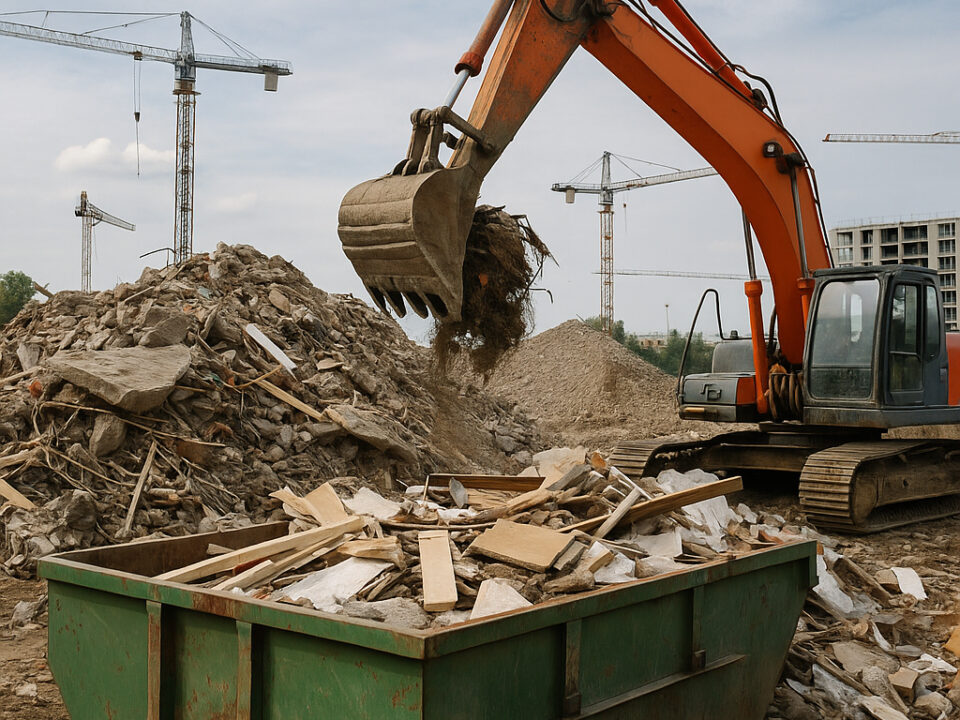
The construction industry is one of the world’s largest generators of waste—responsible for up to 30% of global solid waste. As urbanization accelerates, so does the challenge of managing construction and demolition (C&D) debris. Sustainable waste management has become a crucial step toward reducing environmental impact, conserving resources, and promoting circular economy practices across the building sector.
Do you like it?
October 1, 2025
October 1, 2025
Categories
The Global Waste Management Outlook 2024 highlights the critical waste crisis and provides pathways toward a sustainable future. Each year, over two billion tonnes of municipal solid waste (MSW) are generated globally. This waste contributes to the planetary crisis, leading to pollution, biodiversity loss, and climate change.
Do you like it?
September 15, 2025

September 15, 2025
Categories
The 2025 Reading Guide on Circularity in the Built Environment pulls together the most useful frameworks, standards, and tools for turning circular economy principles into real projects—across design, materials, policy, and procurement. It highlights where to start (sufficiency and reuse), how to measure (LCA, circularity indices, DPPs), and what to adopt next (ISO 590xx, BIM integrations), with links to handbooks, indices, and case studies.
Do you like it?
September 1, 2025

September 1, 2025
Categories
The Circularity Gap Report 2025 delivers a powerful message: our global economy is consuming more resources than ever, pushing the planet beyond safe limits. Despite growing awareness, the world has become less circular—with the share of recycled materials (the Circularity Metric) dropping from 7.2% in 2018 to just 6.9% in 2021.
Do you like it?
August 15, 2025

August 15, 2025
Categories
Waste generation is at an all-time high globally, with inconsistent records, informal sectors, and lack of traceability contributing to environmental degradation. This paper introduces a Blockchain-based solution for sustainable waste management, designed to enhance transparency, traceability, and accountability in waste handling and recycling systems.
Do you like it?
August 1, 2025

August 1, 2025
Categories
The rapid growth of urban populations demands smarter and more efficient waste management systems. This study introduces an innovative framework that combines Artificial Intelligence (AI), Internet of Things (IoT), and Blockchain to optimize solid waste classification, collection, and recycling. The goal is to create a sustainable, secure, and cost-effective smart waste management system that aligns with modern smart city infrastructure.
Do you like it?
July 15, 2025

July 15, 2025
Categories
This report by the World Economic Forum emphasizes the urgent need for industries to transition from a linear "take-make-waste" model to a circular economy. It highlights the economic, environmental, and strategic advantages of circularity, offering a framework for accelerating circular transformation across industries, particularly in the context of climate goals, resource constraints, and shifting consumer expectations.
Do you like it?
July 1, 2025

July 1, 2025
Categories
This report, produced by the European Topic Centre on Circular Economy and Resource Use (ETC CE), provides a detailed methodological framework to assess the environmental benefits of circular economy initiatives in the EU. The core focus is on the Circular Material Use Rate (CMUR), a key metric used to measure the proportion of recycled materials reused in the economy. The EU’s 2020 Circular Economy Action Plan (CEAP) sets a non-binding target to double the CMUR by 2030—from 11.6% in 2020 to approximately 23.2%.
Do you like it?
June 15, 2025

June 15, 2025
Categories
Québec Circulaire’s report highlights Québec’s leadership in circular economy (CE) from 2014-2020, sharing expertise via an online hub launched in 2018. It focuses on interdisciplinary research, knowledge networks, and quantifying CE benefits to reduce waste and promote prosperity. Government support aims to scale these practices across Canada.
Do you like it?
June 1, 2025

June 1, 2025
Categories
Royal Philips integrates Circular Economy principles to decouple economic growth from resource use, focusing on six areas: service-based sales (e.g., “light-as-a-service”), recyclable product design (e.g., SlimStyle LED lamp), IT for asset tracking, supply loops with recycled materials (e.g., SENSEO Up), strategic sourcing, and HR incentives. Partnering with the Ellen MacArthur Foundation, Philips measures success via reduced ecological footprints and new revenue streams, urging EU policies to support CE beyond waste management.
Do you like it?
May 15, 2025

May 15, 2025
Categories
The transition to a circular economy (CE) is critical to address environmental degradation and economic vulnerability exposed by global crises like COVID-19. The circular economy aims to keep resources at their highest value, reduce waste, and regenerate natural systems, in contrast to the linear "take-make-waste" model. Financial institutions play a key role by reallocating capital towards circular business models, driving sustainable consumption and production, and supporting the 2030 Agenda.
Do you like it?
May 1, 2025

May 1, 2025
Categories
A Zero-Waste City is an advanced concept in waste management that aims to minimize waste production and completely recover or recycle materials without the need for landfilling or incineration. This idea responds to the environmental crises caused by mass waste generation and resulting pollution.
Do you like it?
May 1, 2025

May 1, 2025
Categories
The circular economy is a shift from the traditional linear "take-make-use-waste" model to a system where waste and pollution are designed out, products and materials are kept in use, and natural systems are regenerated. Unlike the linear economy, which depends on the consumption of finite resources, the circular model promotes sustainability, innovation, and economic resilience.
Do you like it?
April 15, 2025


April 15, 2025
Categories
The current global approach to combating climate change is incomplete, focusing largely on reducing energy-related emissions through renewable energy and energy efficiency. However, these efforts address only 55% of global greenhouse gas (GHG) emissions. The remaining 45%, associated with the production of goods like cars, food, and materials, require urgent attention. The circular economy offers a holistic solution by transforming how products are made, used, and disposed of, drastically reducing emissions and increasing climate resilience.
Do you like it?
- Filter by
- Categories
- Tags
- Authors
- Show all
- All
- advanced oxidation processes
- airborne plastics
- BIM circularity
- bioconversion technology
- bioremediation
- Black Soldier Fly Larvae
- BSFL frass fertilizer
- BSFL Ghana
- BSFL polyphenols transfer
- circular built environment
- circular construction
- Circular Economy
- circular economy Africa
- circular economy aquaculture feed
- Circularity Gap Report 2025
- Circularity Metrics
- Climate Change
- construction waste management
- design for disassembly
- digital product passport
- environmental health
- environmental impact
- environmental pollution
- Environmental Public Opinion
- environmental sustainability in construction
- freshwater contamination
- FT-IR spectroscopy
- Global Resource Use
- global trends
- Global Waste Management
- green building
- insect larvae plastic degradation
- insect microbiome plastic biodegradation
- insect-based feed
- ISO 59020
- kitchen waste agricultural waste insect protein
- lack soldier fly larvae aquafeed
- Latin America
- LCA
- LCA buildings
- mealworms polystyrene degradation
- MFA
- microplastic degradation
- microplastic pollution solutions
- microplastics detection
- Municipal Composting
- Municipal Solid Waste
- Old Clothes
- Organic Waste
- organic waste management Ghana
- organic waste valorization BSFL
- PETase enzyme
- photocatalysis
- plastic waste management
- Raman spectroscopy
- Recycle
- Recycling
- recycling construction materials
- Recycling Rates Patras
- superworms plastic-eating larvae
- Sustainability
- Sustainability Assessment
- Sustainability Performance Indicators
- sustainable agriculture Ghana
- sustainable aquafeed ingredients
- Sustainable Development
- Sustainable Development Goals (SDG)
- sustainable livestock feed
- sustainable waste management
- termite gut microbes plastic degradation
- TiO₂ degradation
- Urban Agriculture
- urban mining
- Waste Management
- Waste Management Greece
- Waste Reduction
- Waste Reduction Strategies.
- Waste-to-Energy
- waste-to-feed technology
- waxworm enzymes polyethylene
March 16, 2026
March 16, 2026
Categories
• This article uncovers the opportunities and hidden challenges shaping the global used‑clothing recycling sector amid the rise of fast fashion.
• By comparing policies, technologies, consumer behaviors, and leading cases like Patagonia and Reju, it highlights the gaps and innovations that will define the future of circular fashion.
Do you like it?